Cart
Introduction
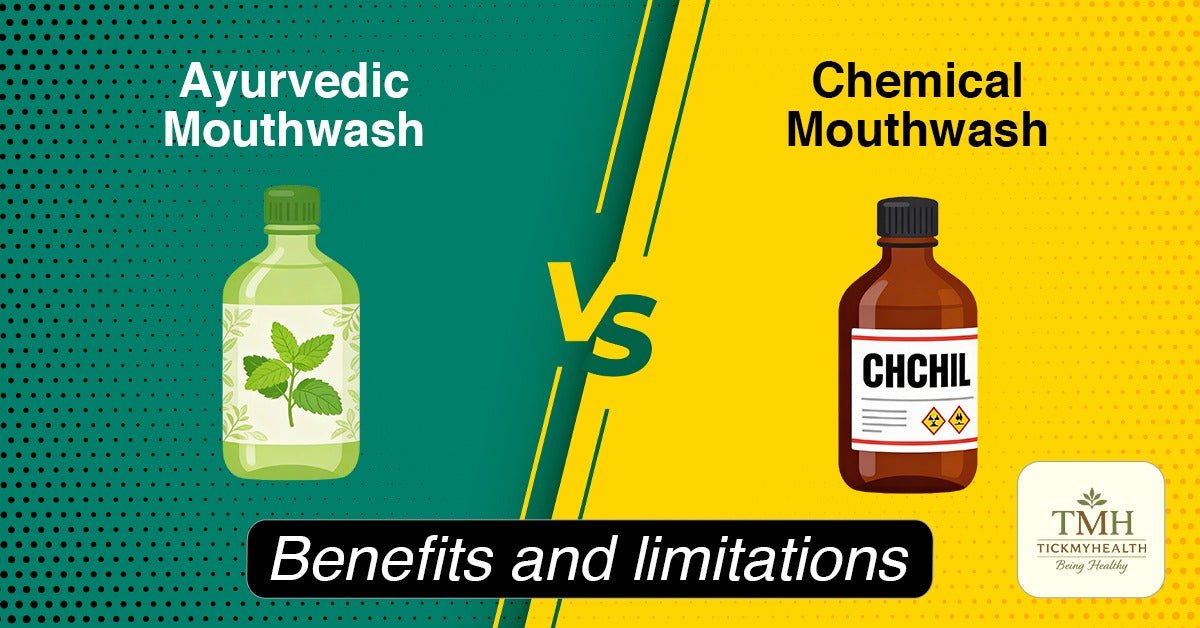
Are you tired of the dry, uncomfortable feeling left behind by chemical mouthwashes? As more people seek healthier alternatives, Ayurvedic mouthwash is emerging as a natural, effective solution. In this blog, we’ll explore the benefits and limitations of Ayurvedic mouthwash compared to traditional chemical mouthwashes, helping you make an informed choice for your oral hygiene needs.
What is Ayurvedic Mouthwash?
An Ayurvedic mouthwash is a natural oral care product made from herbs, plant extracts, and essential oils known for their anti-bacterial and anti-inflammatory properties. Unlike chemical mouthwashes, Ayurvedic options are free from synthetic additives, fluoride, and alcohol. Common ingredients like neem, tulsi (holy basil), clove, and licorice are used to promote oral health naturally.
For those seeking a gentler approach to oral hygiene, alcohol-free Ayurvedic mouthwash is an excellent option. As part of an Ayurvedic oral hygiene routine, these mouthwashes aim to balance oral bacteria, freshen breath, and maintain gum health without the harsh chemicals often found in traditional mouthwashes.
Key Benefits of Ayurvedic Mouthwash
-
Gentle on the Mouth and Gums Ayurvedic mouthwash is gentle on both the mouth and gums, making it a great choice for those with sensitive tissues. Unlike chemical mouthwashes, which often contain alcohol, Ayurvedic mouthwashes are typically alcohol-free, ensuring that they hydrate and soothe the oral tissues without causing dryness or irritation.
-
Natural Antibacterial Protection Ayurvedic mouthwash benefits include its use of natural antibacterial herbs like neem, clove, and tulsi. These ingredients help eliminate harmful bacteria, fight bad breath, and prevent plaque and gingivitis-causing bacteria from accumulating. Anti-bacterial herbal mouthwash provides long-term protection while maintaining the balance of healthy bacteria in the mouth.
-
Mouthwash for Gum Health If you're looking for a mouthwash for gum health, Ayurvedic mouthwashes are a great solution. Herbs like neem are well-known for their anti-inflammatory properties, helping reduce gum swelling and promoting healing. Regular use can strengthen gum tissue, lower the risk of gum disease, and improve overall gum health.
-
Best Mouthwash for Bad Breath One of the most common reasons people turn to mouthwash is to combat bad breath. Ayurvedic mouthwashes offer a natural solution. Ingredients like clove and mint not only freshen breath but also tackle the root cause of bad breath—bacteria. A fresh breath natural mouthwash made from these herbs offers long-lasting freshness without the need for synthetic additives.
-
Holistic Oral Hygiene Routine Incorporating Ayurvedic mouthwash into your daily routine supports a holistic approach to oral care. This approach aligns with Ayurveda’s emphasis on balance and natural healing. An Ayurvedic oral hygiene routine might also include using herbal toothpaste and oil pulling, ensuring your mouth remains healthy and balanced.
Limitations of Ayurvedic Mouthwash
-
Slower Results Than Chemical Mouthwash While Ayurvedic mouthwash provides excellent long-term benefits, it may not deliver the immediate results some users expect from chemical mouthwashes. Chemical mouthwashes, which contain alcohol and other active ingredients, work quickly to kill bacteria and freshen breath. If you need fast relief from bad breath or plaque, chemical mouthwashes might seem more effective initially.
-
Limited Availability Despite its growing popularity in India, Ayurvedic mouthwash may not be as widely available globally. However, thanks to online shopping, finding an Ayurvedic mouthwash for your oral hygiene routine is becoming easier. Keep in mind, though, that the availability of high-quality Ayurvedic products can vary depending on your location.
-
Taste and Sensory Experience Ayurvedic mouthwashes often have a distinct herbal taste, which may not appeal to everyone. While some people enjoy the earthy flavors of herbs like neem or tulsi, others might find them too strong compared to the familiar minty taste of chemical mouthwashes. If you’re used to the fresh, minty sensation of traditional mouthwashes, the herbal taste might take some getting used to.
-
Higher Cost High-quality Ayurvedic mouthwash products, especially those made with organic and premium ingredients, can be more expensive than chemical alternatives. However, if you are looking for a natural mouthwash for oral hygiene, the investment in quality, chemical-free products can be well worth it.
Understanding Chemical Mouthwash
Chemical mouthwashes are typically formulated with synthetic ingredients designed to tackle specific oral health issues. Common ingredients include alcohol, fluoride, and antiseptics, which target plaque, bacteria, and bad breath.
Benefits of Chemical Mouthwash
-
Immediate Results Chemical mouthwashes deliver rapid effects, providing quick relief for bad breath and plaque. Their potent active ingredients work quickly, offering a clean and fresh feeling almost immediately.
-
Fluoride Protection Many chemical mouthwashes contain fluoride, which helps strengthen tooth enamel and prevent cavities. For individuals at higher risk of tooth decay, fluoride-based mouthwashes can provide added protection.
Limitations of Chemical Mouthwash
-
Alcohol and Dryness A common drawback of many chemical mouthwashes is their alcohol content, which can cause dryness and irritation, especially with frequent use. This can lead to discomfort for those with sensitive gums or mouth tissues.
-
Artificial Additives Chemical mouthwashes may contain artificial colors, preservatives, and flavors that some people may wish to avoid. These additives can cause irritation or allergic reactions in sensitive individuals.
-
Temporary Effect While chemical mouthwashes can provide immediate results, their effects are often temporary. They may mask the symptoms of bad breath or plaque but won’t address the root causes of oral health issues.
Choosing the Right Mouthwash for You
Deciding between Ayurvedic mouthwash and chemical mouthwash depends on your personal preferences and oral health goals.
-
Ayurvedic Mouthwash is the ideal choice for those seeking a natural, alcohol-free alternative that provides long-term oral health benefits. With ingredients like neem and tulsi, it supports gum health, freshens breath, and helps balance oral bacteria naturally.
-
Chemical Mouthwash, on the other hand, may be more effective for those seeking immediate relief from bad breath or plaque. Its quick results can be appealing, especially when you need a fast solution.
Both types of mouthwashes have their place in oral hygiene, so the right choice depends on your specific goals—whether it’s fresh breath, gum health, or long-term maintenance of a healthy mouth.
Conclusion: A Natural Path to Oral Health
Ayurvedic mouthwash offers a gentle, natural solution with long-term benefits such as fresh breath, gum health, and anti-bacterial protection. If you're looking for a holistic approach to oral care, Ayurvedic mouthwash is the ideal choice. Chemical mouthwashes, though effective for quick results, may not provide the lasting benefits or gentleness that Ayurveda offers.
At TickMyHealth, we’re excited to soon launch our own Ayurvedic Mouthwash, crafted with premium natural ingredients for a healthier, alcohol-free alternative to traditional mouthwashes. Stay tuned for this new addition to your Ayurvedic oral hygiene routine!
Tips for Great Oral Health:
-
Switch to natural products for a gentler, more holistic oral care routine.
-
Brush twice a day, floss daily, and stay hydrated to support your oral health.
-
Regular dentist check-ups ensure that your oral hygiene routine stays on track.
Keep an eye on TickMyHealth for the launch of our Ayurvedic mouthwash, coming soon to elevate your oral health naturally!
Frequently Asked Questions
Ayurvedic mouthwash is a natural oral care product made from herbs and plant extracts like neem, tulsi, and clove. It provides anti-bacterial and anti-inflammatory benefits, promoting gum health and fresh breath.
Ayurvedic mouthwash uses natural ingredients and is typically alcohol-free, while chemical mouthwashes contain synthetic chemicals like alcohol and fluoride to quickly kill bacteria and freshen breath.
Yes, Ayurvedic mouthwash can help fight bad breath by eliminating bacteria that cause odor, thanks to ingredients like clove and mint, providing long-lasting freshness.
Yes, Ayurvedic mouthwash is great for gum health, with ingredients like neem known for their anti-inflammatory properties, helping to soothe and protect the gums.
Ayurvedic mouthwash offers long-term benefits, but results like fresher breath and improved gum health may take a little longer to show compared to chemical mouthwashes that provide immediate effects.


Recent Post


Tags